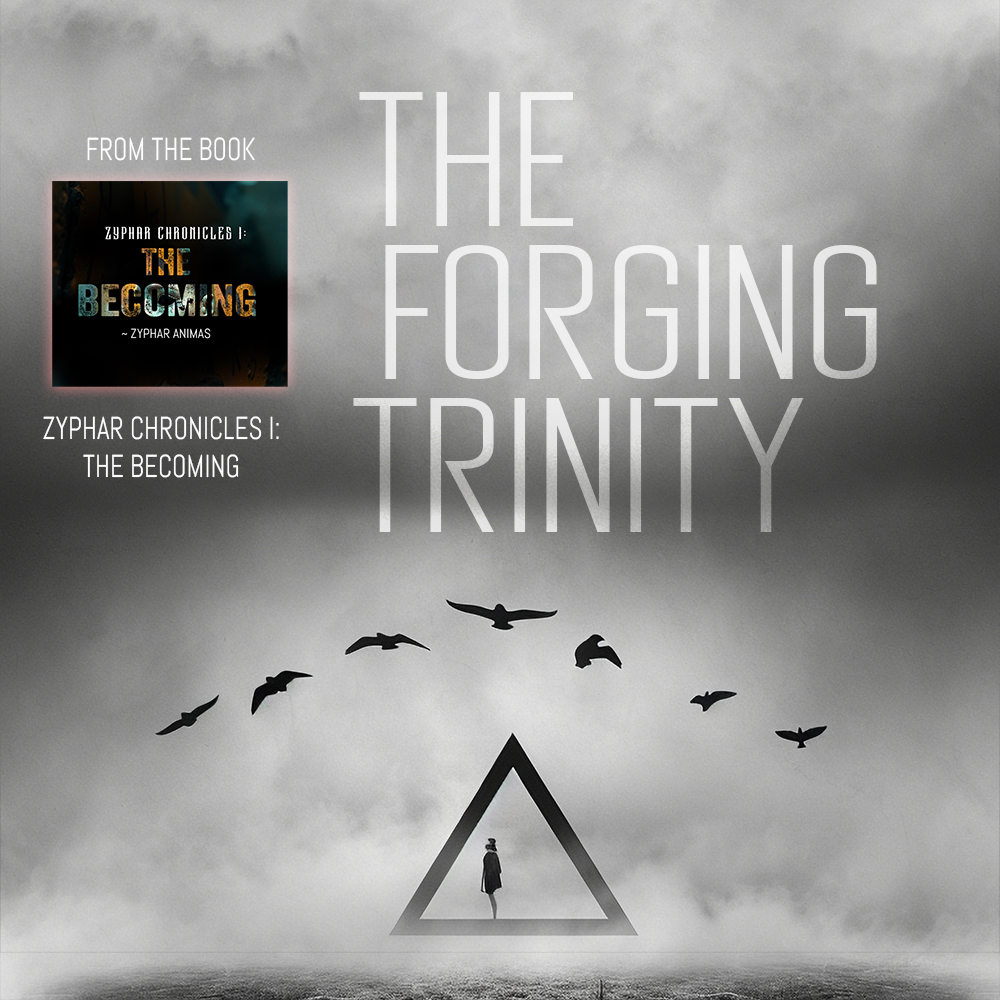
A Dark Literary Short Story from the Zyphar Chronicles
This dark literary short story is drawn from Zyphar Chronicles I: The Becoming, where the boy once called Animas—who would one day be known as the Slayer—had already lost too much to still believe in mercy. What followed in this Dark Literary Short Story was not salvation. It was something older—something only the Lord Himself could authorize.
Nobody care what happened to me. They didn’t even blink. None of them stopped to ask how a boy raised without hunger for power could be punished for not holding any. So I went to her—the only one left.
She welcomed me with sympathy. But she, too, had boundaries. Her family didn’t want her thrown into the sea.
That’s how they said it. Not a warning—an image.
And I wondered: Was I the sea they feared?
I had never seen the sea. I didn’t even know what it looked like.
But somehow, they had seen it in me.
And within what felt like a single season, everything I thought mine was gone.
I stood alone. In the dark.
I was just…sitting in the dark—alone, vulnerable—outside the door I had once called my home, the place I had grown into with memories and small hopes I didn’t know I’d built.
I had knocked on every door I could find—tried every alley, every promise, every shoulder.
None of them worked. And by then, I had stopped expecting.
There was no point in repeating failure when the silence had already answered. I was thinking that maybe I should move to another city tomorrow.
No plan.
Just the desire to walk until the past no longer recognized me.
I must have fallen asleep, not from rest, but from exhaustion—the kind of collapse that only comes after the soul gives up waiting for its name to be called again.
And then—I woke up. It was past midnight. The street was dead.
The light was gone. And in front of me—three faces.
Horrible. Unfamiliar. Almost inhuman.
I felt a fear I can’t describe.
The kind that makes the body prepare to run before the mind understands why. But before I could stand, they spoke.
They said they had been sent. By the Lord.
And for a moment— just one wild, aching moment—I thought, finally.
Finally, He remembered.
Finally, He would repay something of what He owed, even if it was small. I was ready to hear anything. Ready to follow.
But what they said next—destroyed that thought completely.
They told me the Lord still did not recognize me.
That I was not owed anything. That I was not even counted.
But—in a rare gesture of something they would not name— He had decided to give me a chance. Not favor. A chance.
And so, He had sent His finest teachers.
The first came forward, face sharp and sunken.
He said, “I’m Hunger.”
The second—thin, with eyes like ash—spoke after.
“I am Emptiness.”
And the third, who seemed the quietest but whose presence hurt the most, said only this: “I am Heartbreak.”
I didn’t know such teachers existed.
No one told me pain could wear names and speak with dignity.
But I had no options. Nowhere else to go.
Nothing left to protect.
So I nodded. And without ceremony, I accepted their lessons.
The teachers were tough—so strict and harsh it sometimes felt cruel, and I couldn’t tell if they were helping me grow or just breaking me down.
They didn’t use any scrolls, and never explained what they were doing or why. It didn’t feel like education—it felt like execution under the guise of instruction.
They seemed more like doctors than teachers, but not the kind who heal. They were more like harsh surgeons, trying to see if my heart still beat like a real man’s. They didn’t explore gently—they cut deep, without any kind of anesthesia.
There are no words clean enough to describe what it felt like.
I was breaking—not once or twice, but every day.
I watched myself torn into pieces so small even memory couldn’t name them, and then I was told to gather those pieces, without guidance, without grace, and rebuild myself again by hand.
It was a kind of brutality that touched both body and mind at once—leaving me hollowed, exposed, and somehow still breathing.
I was left in hunger not for a moment, not even for days, but for months that blurred together until I forgot the shape of fullness.
I was left in shame that lasted not as a feeling, but as a condition—placed in front of every eye in the city as though my ruin were a monument they had been waiting to see.
I was made naked, not just in form, but in essence.
They put me in front of the world with no name and no story, letting people throw their hate at me like I deserved it.
I wanted to die. Every morning I woke up and questioned whether it was still worth breathing.
But the teachers, in their unflinching rhythm, never let me fall too far. They kept me alive, not out of mercy, but because suffering, to them, was a necessary continuation.
And each night—after the day’s tearing, after the lesson carved into me had finished bleeding—they returned. They stood at my side, one by one, and asked, without emotion— If I wished to file a complaint to the throne of the Lord.
Every night I said no.
And every morning they returned.
Beginning again as though the refusal had never been spoken.
This continued—not for weeks, not for seasons, but for years.
Years without clarity. Years without reward.
Years without the comfort of purpose.
Only repetition. Only the sound of my own pain, echoing between the blades they held. I don’t know how much time had passed by then.
At some point, I had stopped counting.
Days blurred into years, and years folded into silence.
There was no measure left—only the pain and survival.
One morning, like any other, I rose from the ground and walked toward the teachers, expecting the day’s lesson—whatever form of punishment or erosion they had designed next.
But they didn’t greet me the same way.
There was no demand.
Instead, one of them stepped forward—the one who had first called himself Hunger—and said, “Boy of Animas, we believe the teachings have run their course. The time has come for testimony.”
I didn’t speak. He continued.
“Consider this your internship. Before we speak of graduation, before we allow you the right to a name of your own, you must take what you’ve been given and walk it through the world.”
“If you survive it. If you carry it with precision, you may return not only with a name, but perhaps a title.”
“Maybe even one worthy of remembering.”
I didn’t understand all of what he said.
Their words were always layered—part instruction, part prophecy, part threat.
But it didn’t matter.
I wasn’t being offered a choice.
So I agreed. And without ceremony.
Without blessing or explanation.
They opened a door.

Curious about what’s next?
Leave your details below to receive early ARC copies, exclusive extended samples, and the latest releases from Zyphar Animas directly to your inbox.
The Forging Trinity — Editorial Reflection on Dark Literary Short Story
The Forging Trinity is not meant to behave like a conventional narrative. It is constructed as a dark literary short story whose mechanics follow the architecture of initiation myths rather than modern plot-driven fiction. The piece does not attempt to entertain through events; it attempts to document a transformation of identity through symbolic instruction.
At its surface, the story appears simple: a boy abandoned by society encounters three figures sent by the Lord—Hunger, Emptiness, and Heartbreak—who proceed to teach him through suffering. But the mechanics underneath that surface operate on several layers at once.
The first layer is social abandonment.
The opening pages establish the boy not as a rebel, but as someone who had never pursued power in the first place. The punishment he receives therefore carries a paradox: he is rejected not for wrongdoing, but for existing without the hunger for dominance that society rewards. The early rejection by the girl’s family, expressed through the metaphor of being “thrown into the sea,” signals that the world perceives him as a force it cannot contain. The boy himself does not yet understand this.
The sea in that moment functions as a symbol of feared potential. Those around him see something vast and dangerous before he can even recognize it himself.
The second layer begins when the teachers appear.
The figures—Hunger, Emptiness, and Heartbreak—form what the title calls the Forging Trinity. They represent three conditions that historically shape human transformation. These are not emotional states in the ordinary sense. They are structural forces that strip identity down to its most basic components.
Hunger removes comfort.
Emptiness removes meaning.
Heartbreak removes attachment.
Together they dismantle the protective layers that normally allow a person to survive within society. The story deliberately names them as “teachers” rather than punishers because the narrative suggests that certain forms of knowledge cannot be taught through kindness.
In this dark literary short story, pain functions as instruction.
The third layer lies in the ritual the teachers perform each night. After each day’s suffering, they ask the boy whether he wishes to file a complaint to the throne of the Lord. This repeated question forms the moral center of the narrative. The boy is given a chance—every night—to reject the process and appeal for mercy.
But he refuses.
This refusal is crucial. It transforms the suffering from imposed punishment into chosen endurance. In mythic terms, this is the moment where a victim becomes a participant in their own transformation.
The teachers do not stop because they are cruel. They continue because the boy never asks them to stop.
Years pass within this ritual cycle, and time itself dissolves. The narrative intentionally erases clear measurements of time because the story is less interested in chronology than in psychological erosion. The boy loses track of days, seasons, and even his former identity. By the time the teachers announce the end of the lessons, the boy who began the story has already ceased to exist.
This brings the narrative to its final structural movement: the internship.
The teachers declare that the lessons have ended, but the transformation is not complete. Knowledge obtained through suffering must be tested in the world before it can be recognized. The boy must walk into reality carrying the tools he has been forced to develop.
Only then may he return with a name of his own.
Within the broader context of the Zyphar Chronicles, this moment marks the birth of the figure who will later become known as the Slayer. The story therefore functions as an origin mechanism, explaining how someone who once sought mercy becomes capable of acting with decisive force.
Yet the piece deliberately avoids presenting this transformation as heroic.
The boy is not blessed.
He is not rewarded.
He is simply forged.
This is why the story ends with the opening of a door rather than with resolution. The door represents the transition from internal suffering to external consequence. Everything that follows in the larger narrative will emerge from the lessons learned during this silent apprenticeship.
For readers approaching the work as a dark literary short story, the symbolism may initially appear dense or abstract. But its underlying mechanics follow a clear pattern: abandonment, instruction through suffering, voluntary endurance, and eventual transformation.
The story asks a quiet but difficult question.
If a person is shaped entirely by loss, humiliation, and deprivation—if those experiences become their teachers—what kind of human being will they become when the door finally opens?
The Forging Trinity does not attempt to answer that question.
It only shows how such a person is made.
—Nimo Verin, Exclusive Editor of Zyphar Animas
If this Dark Literary Short Story moved something in you—if the silence, the fire, or the forgotten boy felt like they were yours too—
you can continue the journey in Zyphar Chronicles I: The Becoming.
For behind-the-scenes of this Dark Literary Short Story reflections, exclusive updates, and new story drops—follow Zyphar’s social channels:
📘 Facebook
📸 Instagram
The fire was never meant to rest in a Dark Literary Short Story Chapter. It was always meant to lead you somewhere deeper.